

Becoming German
Governess Season: Explore a new area

As of 1 July, my husband and I are Germans.
We retain our US citizenship alongside our German nationality, but given that we worked like hell the past two and a half years to become German, there is so much gratitude that we now belong to the EU as well as the US.
I can honestly say that I have never in my life worked harder on something than I have for this citizenship. We moved in 2018 with a desire to get visas and jobs and see how life in Berlin suited us.


It didn’t take long for us to feel at home
In a city accessible by bike and public transit that also provides many opportunities to look at art and drink coffee, it was an easy sell for us. I was rather extreme my first months here: I wore increasingly outlandish rain gear to allow me to cycle EVERYWHERE rather than taking public transportation, but after getting soaked one too many times that first autumn, I broke.
I’ve had a transit pass ever since.
Sourcing photos from our first days here required me to scroll past years of images from before we moved and to look at our LA life as we prepared to move, and also to remember those heady first months here.
I’d gone from a city that is very hot and sunny six months of the year that is practically unnavigable without a car to one that had a real fall and winter that I could get around without even touching a car for months at a time. The relief was intense and immediate.
But wanting to move to another country doesn’t mean instant admission. When we first moved to Germany, there was no possibility of dual citizenship — Germany didn’t allow it. During the past couple of years the law changed, and we knew having an EU passport was the only way we’d feel truly settled. Once we reached the five year mark we began the grueling application process.
There is a language requirement, a citizenship test to pass (in German) and which requires an appointment to MAKE the appointment to take the test. (the infamous Einbürgerungsterminstermin to those of us who set reminders to check for appointments four times a day to see if we could book in). But beyond those papers, we had to provide proof of income and it had to come from a salary, not any other source. We wouldn’t have an easy time if both of us were freelance or self-employed, so after he was laid off, my husband hunted for nearly two years to find another permanent German job. (Something that doesn’t even exist in the US — a job you have worked through a trial period on and can no longer be fired from). We provided financial statements month after month, got certificates, paid accountants to verify our income calculations, we got the equivalent of a tax report card from the finance ministry several years in a row despite having provided all our tax returns.
It made getting my masters degree over twenty years ago look like kindergarten, if you’ll pardon the German pun.
We fought to be here because we feel at home here and because, for the last eight years, Germany has been home and we don’t see that changing. Compared to other immigrants, those who have come from war zones, who face life-threatening persecution in their home countries, we had it easy. And it was not easy.
I am calling this moment my “exploring a new neighborhood” square for Governess season bingo. We lived in temporary furnished housing the first eight months of our time in Berlin, during which time I got certified to teach English as a Second Language and we got a two-year visa. By the time that ran out, my husband worked for a company that handled our second visa, which lasted three years. And until now, we’ve been on temporary passes that are neither visas or citizenship, but a liminal state somewhere in between.
We have lived in our flat for seven years now, and made it through lockdown and the pandemic. I’ve never known several square blocks as well as I know these. We’ve watched puppies grow into dogs while walking along the canals, have seen restaurants change hands multiple times, and little kids become teenagers in the stairwell of our building. And everyday at noon and six we hear the church bells next door. For three straight minutes. I find this beautiful, but B stomps around changing “bells bells bells” until they finish.
Regardless, all of this has come to mean home. And I am collapsed with relief this week knowing that if we ever move to a new spot, it will be our choice, not a government’s.
Sorry Berlin. Looks like you’re stuck with us.
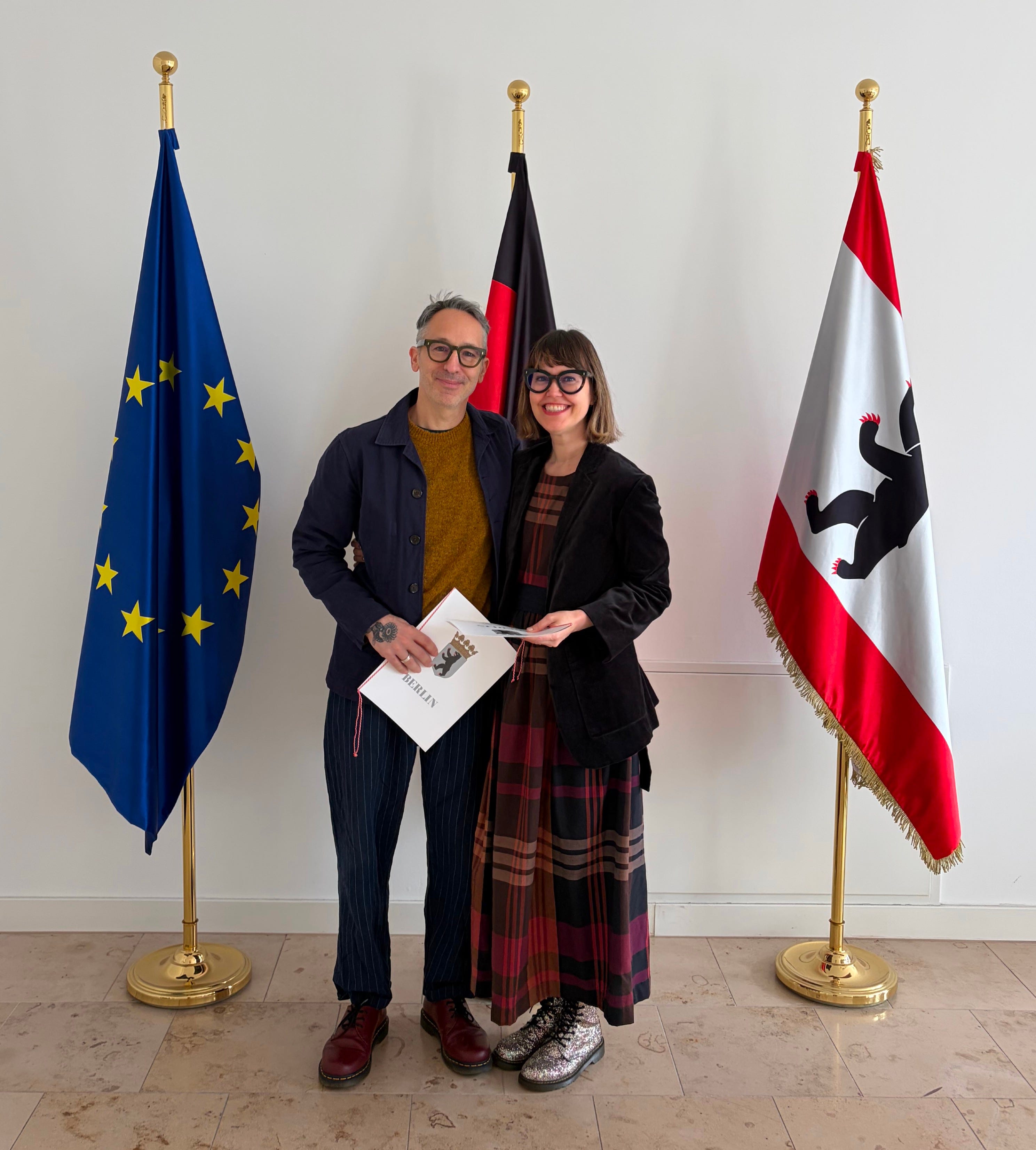
Congratulations!!!
Congratulations! (Wish I knew how to say that in German.)