


Instead of Footnotes this month, I give you a concept I’ve been exploring recently. It’s still forming, but I’m dying to share.
I have always found productivity-focused approaches to life irritating. In German, we say “es nervt,” or directly translated, “It nerves.” That the only purpose our lives have is to crank out more widgets so we can then buy even more widgets has never sat well with me.
In recent years, I keep seeing posts from men, tech bros one might call them, extolling the virtues of “monk mode” which, as far as I can tell, is foisting all life admin off on other people so the ‘monk’ in question can focus exclusively on work.
For writers and creatives, this is the dream — or so we think.
However, what it leaves out is the need for replenishment, connection, and curiosity. Living in monk mode means an uninterrupted stream of output, be that writing, art, music, or code. But I’ve never been able to create in a vacuum.
Whenever I’ve had time to myself to work with no other distractions, and this has happened for maybe two weeks total in my entire life, a natural rhythm develops: a few hours of writing and then some other creative activity that allows me to space out and daydream about my project, and then a third period where I read, watch a film, see an art show, or have a really juicy conversation with a friend.
The alternative: Governess Mode
Along with all the hype about monk mode, some friends and I have noticed a huge uptick in nun content: books, YouTube videos, and a general fascination with the nun life. While on the surface, nun mode appears to be the companion of “monk mode,” I don’t feel this is actually the case. Yes, nuns withdraw from worldly distractions, such as social activity, fashion, and secular culture, but most nuns don’t get the benefit that those touting monk mode champion: lack of responsibility for others.
Nuns often participate in charity and help the community they are a part of, even if that only extends to their nunnery. Actual religious orders of monks also have these responsibilities, but those on YouTube teaching monk mode seem to forget this. Nor is community and charity a negative part of life, unless you want to hole up in a cave and deal with no one else. (And I have had these moments, so I get the impulse.)
But the issue I don’t see any of these ways of life addressing is the wellspring of creativity: feeding curiosity.
We in the twenty-first century romanticize the governess. I adore the idea of a private tutor who might teach me many subjects in a comfortable setting where my skills and preferences, as well as learning quirks, were respected.
Rather than a monk mode that wants us to spew streams of code like black bile into the world, what if we could live in Governess Mode?
The Credo of Governess Mode
We need to make a few adjustments to the 19th-century governess in order to make this mode suitable for today’s independent student. I propose the following adjustments:
Governess Mode: 21st Century Principles:
You, the student, choose the subjects you wish to study
The goal is to follow curiosity rather than to impress society
An equal balance between learning and discovery and creating new art (writing, music, visual art, film, etc.) is ideal.
The Governess exists as a learning fairy godmother construct to help you frame your discoveries and creative life
No two people will have identical Governess Modes; it is, by necessity, custom-built to the individual
Let’s be clear: your enjoyment of Governess Mode is the point.
If you aren’t having fun, change something or give this up entirely.
This is not about following the steps that I use as my governess mode. It’s about deciding to pick a list of things that fascinate you, taking those interests seriously, and giving them time and space to grow as part of your investment in your creative work.
For me, being a writer is as much about reading book after book of textile history, working on my German and trying to revive my French, sewing clothes, reading a wide range of fiction and nonfiction as it is about typing words into a keyboard.
In fact, barely any words get typed if I don’t do all the things I listed above. We spend so much time as a society measuring the equivalent of words typed on a keyboard that we forget how exhausting that process becomes without sufficient inspiration to fuel it.
Even when we are inspired, writing books is damned hard work, and whenever I or anyone I know finishes writing one, we collapse in a heap for weeks afterward. Yes, it involves a lot of sitting and staring, but writing and all creative arts burn as much fuel as if we were running ultra marathons day after day.
Governess mode provides the fuel that gets art made.
Here’s how I started living like I have the best governess ever directing my education:
I pay close attention to what lights me up. If I get a spark and think, “fascinating!” I take that seriously and make a note of it.
I experiment with these topics for a bit. Some get boring quickly, but some stick. Not everything has to be a learning project.
Which teacher would be my dream instructor in this subject? They don’t have to be alive, and I can have more than one. Books, films, articles, and even live classes are all possible if I’m lucky.
A variety of subjects is ideal. I like to mix cerebral topics, like languages, with handicrafts, like sewing and knitting. Mixing these into my day means I get inspired by different experiences, and this is more likely to match my mood.
No goal-setting with these subjects. I pursue them because I find them fun. That is enough. This sometimes means reaching a milestone, like sewing a coat, but the point was the fun, not the coat as proof I’m using my time wisely.
It is so easy for us to morph activities we enjoy into work. The lure of the side hustle seemed to be a way to combine work and fun, but what it really did was to take everything we loved and turn it into our jobs. Not exactly the delightful outcome we hoped for.
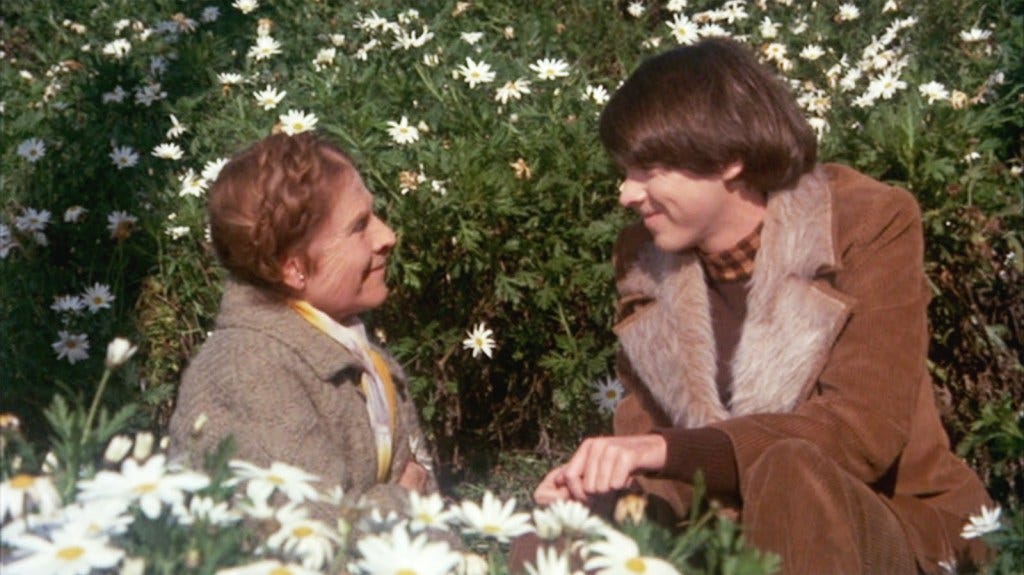
I prefer to follow a governess of my choosing, one who seeks joy for no other purpose than the improvements it gives us every day. If I could have anyone as my governess, it would surely be Ruth Gordon as Maude in the iconic Harold and Maude,1 perhaps an even more subversive film now than in its release year, 1971.
I have recently finished reading the second book in a series by Robert Jackson Bennett. The first book is The Tainted Cup. The second book is A Drop of Corruption. A significant part of these stories involves the main character who has had his memory altered so that it is legally admissible. He’s called an engraver because memories are literally engraved into his mind, and how he holds onto these memories is to encode them with tiny vials of scent.
This feels delicious to me because I’ve noticed my memory functions similarly. There are scents that call up a particular time and place more vividly than photographs, more vividly than textures, more vividly even than going back to those same places. The scent of them brings them alive. For some reason, this seems to be true particularly with shampoos. I have two shampoos currently that capture times and places better than anything else I could have constructed for such a purpose.
Interestingly, neither of them was deliberately chosen. I simply had my hair washed at my hairdresser’s one day and inhaled a scent that transported me to the beach we went to for two weeks every summer when I was a child. It had the particular smell of the sunscreen that we used, which I think was Coppertone. And I don’t think that the smell of the sunscreen would completely capture the scent that this shampoo does. Now, when I’m in the shower, it’s steamed up and I’m washing my hair with the giant one-liter bottle I ordered, I am suddenly eight again, running across the sand, ready to run into the ocean. And the gift that this has given me is beyond what I could expect from just washing my hair.
The other shampoo is one I bought to replace one that had tragically been discontinued. I selected another scent, and when I smelled that one, I was suddenly 12 years old and back at camp. And I felt the rivets of the trunk I packed my clothes in. I can remember the books I read that summer. I can walk around in my mind inside the bathroom and shower where I was navigating the complexity of an early period. All of this came back to me, and I have learned I am now two-thirds of the way through this bottle of shampoo, which I have just used now to wash my hair in the bath and have realized I’m going to have to get another one so that I have access to these memories into the future.
The funny thing is we can’t control when these scents come, unless we’ve used a particular perfume for a long time. I have one, L’Ombre dans l’Eau by Diptyque, that calls up a particular Christmas when I bought it in San Francisco. I can put it on and I can feel like I’m in my 20s again, wandering in Union Square in San Francisco, just having finished graduate school. And there is a particular spark I can access when wearing that perfume that doesn’t come from other places.
I think part of governess mode is accepting that we aren’t just heads on top of bodies. I particularly love the description of this that Ken Robinson talks about in one of his many gorgeous TED talks in which he says that our education system was designed to crank out university professors. Successful graduates end up living in their heads and, as he puts it, slightly to one side.
And I think for a long time that was very much how I lived or how I wanted to live because it felt so much simpler. The body felt like a complexity or a liability, something I didn’t want to sink into. It’s very easy to see something like monk mode and to think, “Ah yes, finally I will be freed of the body.” But I realize now that I don’t want that because if I was free of a body, I wouldn’t be able to smell these smells and I wouldn’t have access to these versions of myself that come along with them.
What I want is to think of the body as a portal, to think of the body as a friend and to make it a partner and ally in this idea of governess mode. And it’s for this reason that things that people may find frivolous, like nice stationery, like makeup, like the clothing we wear, is part of the mode for me. I dress myself up like a character when I want to feel a certain way. I use a certain shampoo or wear a certain lipstick or choose which glasses I’m going out in for the day based on what version of myself or what portal to myself I want to activate. And this is part of governess mode too. It’s a discovery, it’s a continual discovery. It’s a relationship we build with ourselves and with our imagination because it is so ephemeral, the imagination, but it lives in the senses, too.
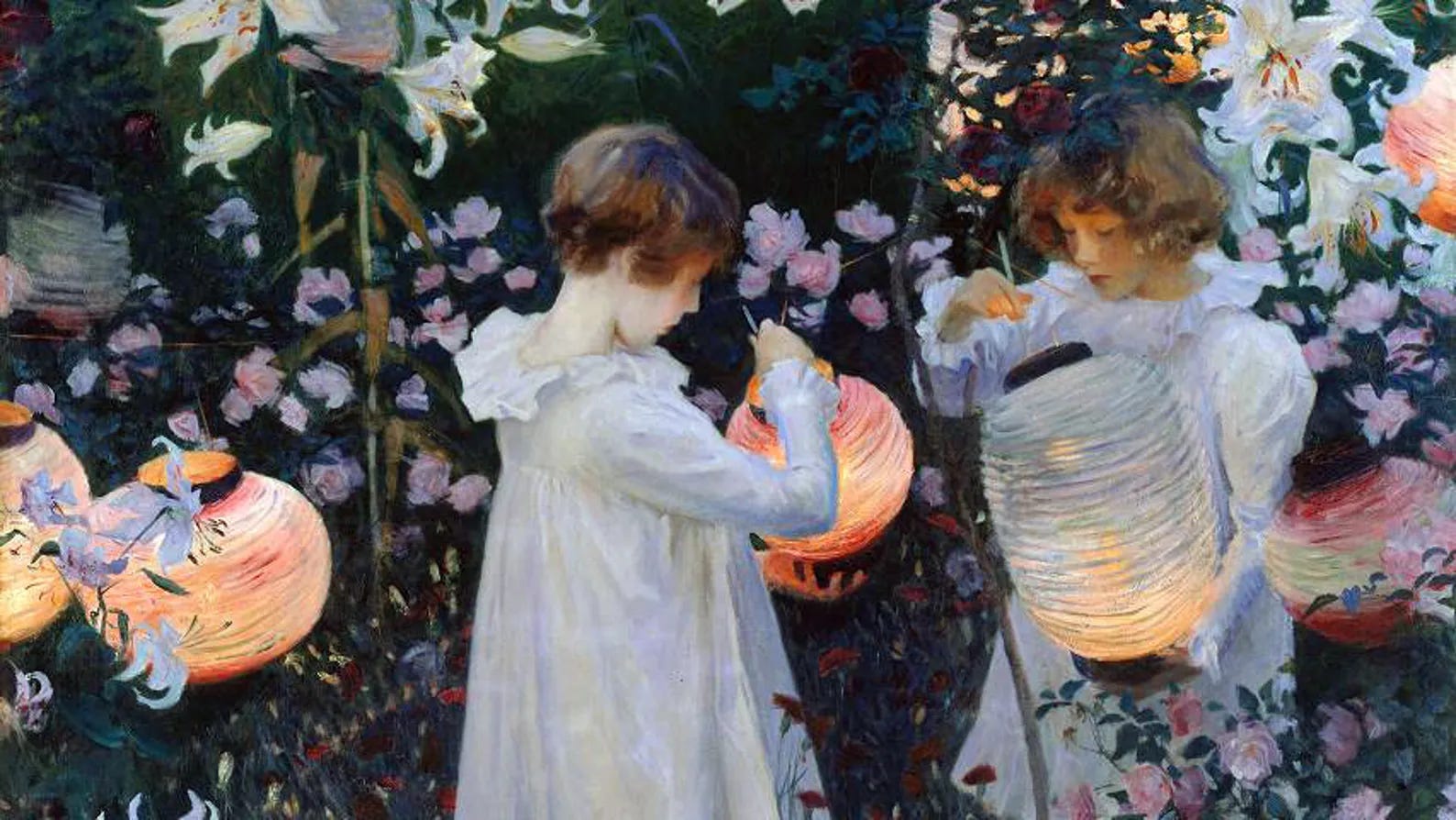
So the point is not to live in the least embodied part of ourselves, but to recognize the points where the ephemeral gets caught or where it clings onto reality in a physical sense, and to note those points of contact and to embrace them and to remember where they are so that we can pass through them to get back to that ephemeral way of thinking and being.
It reminds me a lot of Philip Pullman’s book, The Subtle Knife. It’s like senses can be that knife that cuts through into another reality. We think that the only way through is our mind, but I don’t think that’s true. So a lot of this operating in governess mode is an attempt to build a reliable way through, a reliable way—or maybe not reliable because that makes it feel too mundane. It’s more like a practice than it is a metal door we can open to see the same thing every time.
Finding governess mode is seeking portals to experience that light up your curiosity, like fireflies on a summer evening. We see the lights flashing around us and chase them, mostly for the joy of seeing where we go.
Most of us have so many adult responsibilities to attend to that we cross curiosity off the list as a waste of time. But curiosity is where we find answers that haven’t been available before. We need this now.
When you think of “governess mode” what comes to mind? And if you could have anyone as your magical governess, who would it be?
RIP Bud Cort! Thank you for this beautiful film, which got me through more painful days and weeks and years than I can say. You two made something beautiful with Hal Ashby, and wherever you all are floating in the breeze now, I am thankful for you.
The first governess I think of is Mary Poppins. What an advertureous day it would be if Mary Poppins was in charge. But all kidding aside, I love the idea of a personal governess helping me be more curious, encouraging me to try new hobbies, and pressing a particularly fascinating and new-to-me book into my hands, while also making sure I mind my manners and health! All good!
I love everything about this essay! You are the exact RIGHT person to be the governess as you gently and consistently remind us all to follow what lights us up, to play and enjoy our lives and the “work” of creativity.